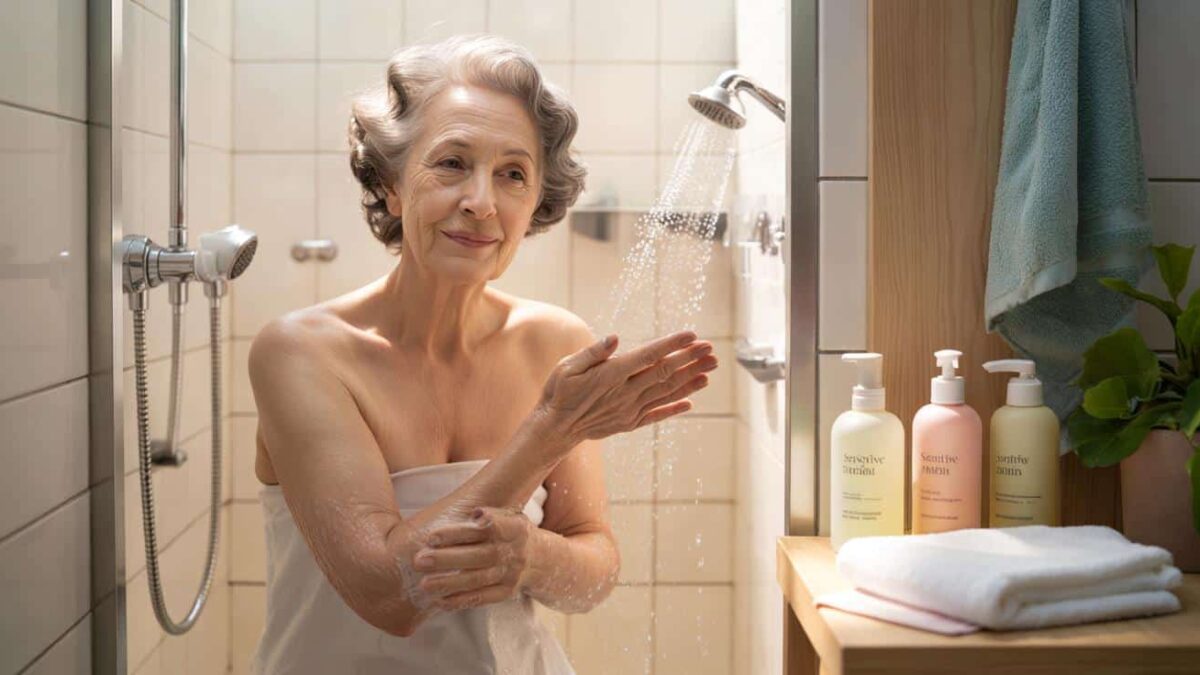
Imagine stepping out of a steamy bathroom feeling refreshed yet comfortable in your own skin—no itching, no tightness, just healthy balance. For many seniors over 65, daily showers lead to dry, irritated skin, while weekly ones risk odor and infections. Discover the optimal shower frequency after 65 that supports aging skin health without extremes.
Aging transforms how your body handles cleanliness. What worked in your 30s or 40s no longer applies, as skin after 65 produces less natural oil and has a thinner protective barrier. This shift demands a smarter hygiene routine to stay fresh and protected.


Understanding Skin Changes After 65
Picture a 72-year-old grandmother pausing before her daily shower, questioning long-held habits after her granddaughter’s innocent remark. Her skin felt perpetually dry despite scrubbing every day—a common plight for seniors.
Aging skin loses sebum, the oil that locks in moisture. Hot water and harsh soaps strip what’s left, causing cracks, flaking, and inflammation. Studies from dermatologists highlight how frequent washing exacerbates these issues, leading to eczema or infections.
Conversely, skipping washes entirely allows bacteria buildup in warm areas like armpits and groin. Seniors often swing between daily duty-bound showers and infrequent ones due to fatigue or fall fears, both creating discomfort.
Meet André, a 79-year-old retiree whose hot, daily rituals left his skin red and scaly. His doctor’s simple query—”How often do you shower?”—sparked change. Reducing frequency healed his skin within weeks.
- Key skin shifts post-65: Reduced oil production, thinner barrier, faster moisture loss.
- Daily shower risks: Dryness, itching, micro-tears.
- Infrequent risks: Odor, fungal growth in folds.
The solution? A balanced approach respecting biology, not tradition. This keeps you clean, dignified, and irritation-free.
The Optimal Shower Frequency for Seniors
Experts recommend 2-3 full-body showers per week for most healthy adults over 65. This rhythm removes dirt without demolishing the skin’s defenses.
On non-shower days, focus on targeted cleaning: face, armpits, groin, feet, and folds. Use warm water and mild cleanser for a quick refresh—think 2 minutes at the sink.
This “rotation” method mimics natural needs. Retirees produce less sweat than active workers, so full scrubs aren’t daily necessities. Lukewarm water (not hot), 5-10 minute sessions, and soap only where needed preserve hydration.
Fatigue plays a role too. Many seniors delay showers due to joint pain or balance issues. Caregivers in senior homes promote “toilette au lavabo”—gentle sink washes—proving effective with fewer skin complaints than daily deep cleans.
Biologically, it’s about equilibrium: cleanse sweat-prone zones daily, deep clean periodically. Adapt for lifestyle—more active folks might need three showers, while sedentary ones thrive on two.
Practical Tips for Gentle, Effective Hygiene
Transitioning feels daunting, but small tweaks yield big results. Ditch the rough loofah for hands or soft cloths with fragrance-free, mature-skin formulas.
Shower smarter: Apply soap strategically, rinse thoroughly, pat dry gently. Follow with moisturizer on damp skin, especially legs and arms, to seal in hydration.
- Daily refresh routine: Wash face, pits, groin, feet with mild soap and warm water.
- Shower day protocol: Lukewarm water, short duration, no full-body soaping.
- Safety upgrades: Non-slip mats, grab bars, shower seats, handheld heads.
For caregivers, empathy unlocks compliance. Phrases like “How can we ease this?” beat mandates. One French home saw skin issues drop after adopting this hybrid model.
Active seniors or those in humid climates may edge toward three showers. Incontinence cases prioritize frequent, local gentle washes over full routines.
Overcoming Common Hygiene Myths and Barriers
“Cleanliness is next to godliness” echoes in many minds, tying self-worth to daily showers. Yet post-65, adaptation honors your body’s evolution—not neglect.
Fear of judgment silences many. Sons learn moms dread tub falls; itch sufferers blame “age” until routine tweaks bring relief. Culture clashes with science, but flexibility fosters comfort.
Product picks matter: Opt for pH-balanced, soap-free cleansers. Avoid antibacterials that disrupt microbiome. Post-wash, ceramide-rich lotions rebuild barriers.
Mobility aids transform dread into ease. Handheld showers allow seated washing; bidets handle private areas discreetly. These tools maintain independence and dignity.
Dr. Léa Martin, a geriatric dermatologist, notes: “Hygiene isn’t about sterility—it’s sustainable care matching your skin’s new reality.”
Building a Sustainable Routine for Long-Term Health
Real stories illuminate paths forward. A woman ended chronic itching by halving showers; a retiree regained confidence with sink refreshes. Families bridge gaps through open talks.
Tailor to you: Track skin response, consult doctors for conditions like diabetes heightening infection risks. Hot climates or sports demand slight increases, always prioritizing gentleness.
Benefits extend beyond skin—less fatigue means more energy for joys like grandkids or hobbies. This rhythm upholds health, freshness, and pride.
In essence, hygiene after 65 thrives on moderation. Embrace 2-3 weekly showers plus smart daily care for vibrant, protected skin. It’s not less effort—it’s wiser self-care, ensuring you feel great at every age.