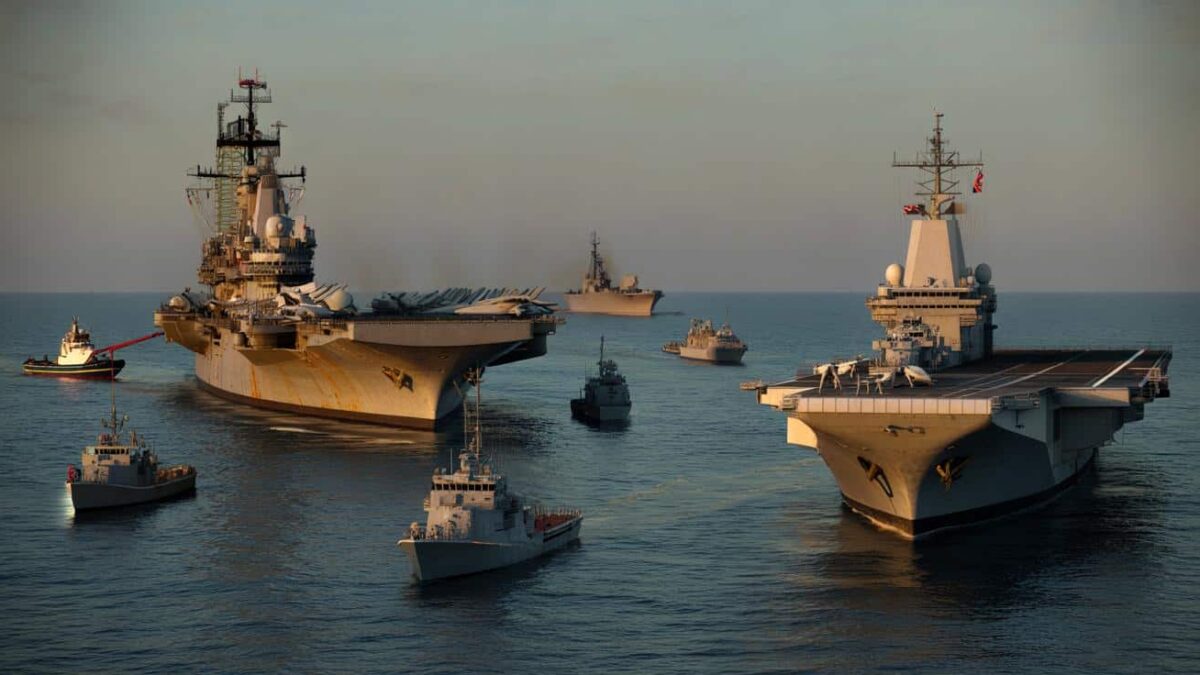
From the shores of Paris, French naval strategists gaze across the Channel at the unraveling state of the Royal Navy, Britain’s once-unrivaled seafaring powerhouse. This historic rival, synonymous with global dominance for centuries, now grapples with shrinking fleets, chronic underfunding, and operational strains. As France positions itself as Europe’s premier maritime force, the Royal Navy‘s troubles spark a blend of strategic opportunity and quiet apprehension in defense circles.
The shift isn’t just numerical—it’s a profound reconfiguration of European naval power. With tensions rising in the North Atlantic, Arctic, and beyond, the implications ripple through NATO alliances and global security. This analysis delves into the Royal Navy‘s downward spiral, France‘s calculated ascent, and what it means for the future of sea control.
The Royal Navy’s Steep Decline from Global Giant
The Royal Navy‘s legacy is etched in victories like Trafalgar and vital wartime convoys. Yet, harsh fiscal realities have eroded its might. Post-World War II, Britain commanded around 400 warships; by 1990, that dwindled to 130, and today in 2025, it operates a mere 62 combat vessels.
This represents an 85% reduction in hulls since the postwar era, transforming a worldwide empire’s fleet into a modest regional player. Iconic assets like the HMS Queen Elizabeth and HMS Prince of Wales aircraft carriers project renewed ambition, boasting superior deck capacity over France‘s lone Charles de Gaulle.
However, the broader fleet tells a different story. Aging vessels, limited escorts, and prolonged maintenance downtimes leave the Royal Navy vulnerable. French counterparts, familiar from joint exercises, note the stark gaps in everyday readiness and sustainment.
France Emerges with a Clear Naval Edge
Across the Channel, the Marine Nationale eyes this vacuum with pragmatic resolve. In key categories, France now holds advantages, flipping the traditional balance:
| Category | Royal Navy (UK) | Marine Nationale (France) |
|---|---|---|
| Aircraft Carriers | 2 conventional | 1 nuclear |
| Top-tier Frigates | 11 | 15 |
| Attack Submarines | 6 nuclear | 6 nuclear |
| Amphibious Ships | 1 in rotation | 3 |
| Estimated Combat Ships | 62 | About 75 |
France emphasizes steady modernization through programs like FREMM multi-mission frigates, Horizon air-defense destroyers, upcoming FDI frigates, and advanced nuclear submarines. Its three Mistral-class amphibious ships enable versatile operations from the Baltic to the Indo-Pacific.
Paris views itself not as a conqueror but as Europe’s steward of blue-water capabilities. Amid surging Russian activities, French vessels increasingly fill voids left by diverted or unavailable British units, shouldering a heavier NATO load.
Beneath the Surface: UK Naval Challenges Unfold
Budget Cuts Hollow Out Core Capabilities
Post-Cold War, UK policymakers prioritized elite projects—nuclear subs, carriers, precision missiles—while slashing the “workhorse” fleet of frigates, patrols, and support ships. This left a top-heavy structure: high-tech stars lacking robust backing.
French observers liken it to a supercar with scant pit crew support. Without ample escorts and logistics, sustained missions falter, exposing strategic overreach.
Shipbuilding Woes Compound the Crisis
Delays plague programs like the Type 26 frigates replacing aging Type 23s, with costs ballooning. The budget Type 31 variant draws scrutiny over its viability in contested waters.
British shipyards face skilled labor shortages in welding, engineering, and design. Inconsistent contracts disrupt workforce stability, unlike France‘s steady, state-supported pipeline that nurtures expertise.
Indo-Pacific Dreams Clash with Harsh Logistics
UK strategy touts “global maritime power,” dispatching carrier groups to Singapore and the South China Sea. These deployments underscore post-Brexit relevance east of Suez.
Yet, reality bites: such operations demand US refueling, allied escorts, and precious support assets. France spots the disconnect between rhetoric and a logistics chain too frail for endurance.
In contrast, Paris leverages bases in Djibouti and New Caledonia for routine patrols. Britain relies on Bahrain and allied Diego Garcia, but with fewer ships and facilities, continuity suffers.
NATO Dynamics Shift as Rivals Take Note
Reshaping Alliance Maritime Roles
The US counts the Royal Navy as its premier sea partner; France once matched it across warfare domains. Erosion prompts recalibration: NATO maritime ops now pivot toward French strengths, supplemented by Italy, Spain, and a rebuilding Germany.
Russia and China exploit signals of diluted high-seas presence, probing with subs in the Atlantic or maneuvers near territories.
From Rivalry to Essential Partnership
Old Anglo-French naval rivalry lingers, with French outlets touting edges. Yet, interdependence grows through joint anti-piracy and exercises.
Discussions explore syncing carrier cycles—France‘s nuclear asset alternating with Britain’s duo—for persistent NATO airpower at sea.
Core Concepts Driving the Power Shift
Key doctrines illuminate the stakes:
- Sea Control: Dominating sea zones while denying foes access. Scarce escorts hinder the Royal Navy‘s grip.
- Power Projection: Delivering forces ashore via amphibs and carriers. France‘s Mistrals and bases provide superior reach.
- Endurance: Long-term deployment viability with fuel, parts, and crews. This Achilles’ heel plagues Britain most.
For France, overextension looms as it covers British shortfalls, risking fatigue and costs. Dual crises—in Europe versus Russia or Asia against China—would strain Paris without a robust UK ally.
Think tanks urge steady French investments alongside nudges for UK fiscal recommitment. The sea, unforgiving, demands vigilance before tempests strike.
Naval Futures: Europe’s Crossroads
The Royal Navy‘s plight forces Europe to confront maritime vulnerabilities. France‘s poised fleet offers stability, but solo burdens threaten sustainability.
Revitalizing trans-Channel ties through shared procurement, training, and ops could restore balance. As geopolitical winds shift, a united front—blending British innovation with French consistency—might reclaim European naval supremacy.
Stakeholders must act decisively. Complacency invites peril; proactive synergy secures the waves for tomorrow.