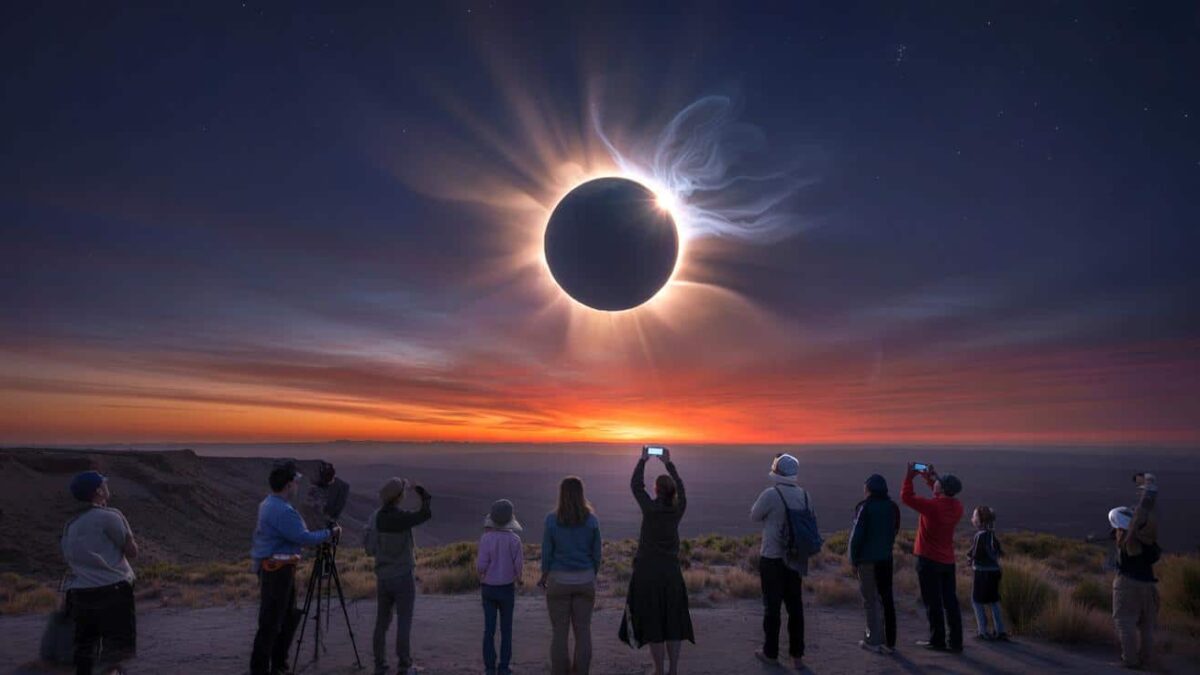
Picture a world plunged into an unnatural midday twilight, where the usual sounds of daily life fall silent, birds stop singing, and a chill sweeps through the air. This isn’t fiction—it’s the mesmerizing reality of a total solar eclipse, but this one stands apart with an extraordinary six full minutes of darkness. Known as the eclipse of the century, set for February 28, 2026, it promises to deliver one of nature’s most profound spectacles, turning day into night and leaving viewers in awe.
The Moon will perfectly align with the Sun, casting its umbral shadow across Earth and creating a narrow path of totality. Within this zone, the Sun will vanish completely, revealing the glowing solar corona and daytime stars. This event’s extended duration allows ample time to soak in the surreal atmosphere, making it a bucket-list moment for astronomy enthusiasts worldwide.
When Will the Eclipse of the Century Occur?
Astronomers are already counting down to February 28, 2026, when this remarkable total solar eclipse will unfold. Unlike standard eclipses that offer only brief totality of two to three minutes, this one delivers nearly six minutes of complete darkness along the centerline. The Moon’s shadow, or umbra, will race across the planet at over 1,000 miles per hour, carving a precise corridor where the full effect is visible.
Only those positioned in the path of totality will experience the true magic: total blackout, ethereal corona, and a sudden drop in temperature. Outside this path, observers see a partial eclipse—a tantalizing but incomplete view with just a portion of the Sun obscured. Planning your location is key to maximizing this once-in-a-lifetime immersion.
Experienced eclipse chasers rave about the emotional impact. Many recall past events like the 2017 North American eclipse, where the world seemed to pause, or the 2010 Pacific crossing that brought instant chills. This 2026 event mirrors those legends but surpasses them with its prolonged totality, thanks to ideal orbital alignments.
The rarity stems from precise cosmic conditions: the Moon appearing larger due to its closer position to Earth, combined with Earth’s optimal distance from the Sun. These factors create the perfect setup for an extended shadow, offering viewers more time to process the impossible beauty overhead.
Why This Eclipse Deserves Its ‘Century’ Title
What sets the eclipse of the century apart is not just its length but its infrequency and transformative power. While total solar eclipses happen globally every 18 months or so, ones with such extended totality are true rarities, occurring only a handful of times per century. The six minutes of darkness give your mind time to fully register the phenomenon, often leading to profound, lasting memories.
History is filled with tales of eclipses sparking wonder and even societal shifts. Communities along the path see massive influxes of visitors, boosting local economies overnight—think hotels booked solid and roads packed with stargazers. The 2017 U.S. eclipse drew millions, swelling small towns by hundreds of percent and creating unforgettable communal experiences.
Weather plays a crucial role, with experts poring over historical data to identify clear-sky hotspots. High-altitude deserts and plateaus often win out due to thinner air and fewer clouds, while coastal areas offer reliable temperate conditions. No matter the setting, the eclipse pierces light pollution, uniting people in shared astonishment under the darkened sky.
Beyond visuals, the event taps into our primal sense of the cosmos. Strangers become instant friends, conversations flow, and a sense of unity prevails. Whether you’re alone on a hilltop or in a bustling crowd, this eclipse fosters connections that linger long after the Sun reemerges.
Prime Locations for the Longest Totality Experience
To catch the full six minutes of totality, position yourself along the path’s centerline, where the shadow dwells longest. Ideal spots cluster in regions known for clear weather, such as vast deserts in central Africa, remote Pacific islands, and rugged terrains in South America. These narrow “golden corridors,” often just tens of kilometers wide, demand careful planning to avoid shorter durations at the edges.
Small towns and remote outposts along the route will transform into eclipse hubs, with locals offering viewing spots amid skyrocketing demand for lodging and supplies. Past events show supermarkets stripped bare and gas stations overwhelmed, so early preparation is essential.
Key Factors for Selecting the Perfect Viewing Site
Choosing the right location involves balancing weather reliability, accessibility, and horizon views. Here’s what to prioritize:
- Desert regions: Offer vast open skies with minimal cloud cover, perfect for unobstructed views of the solar corona.
- High plateaus: Elevations reduce atmospheric distortion, sharpening the eclipse’s details for a crystal-clear show.
- Coastal areas: Steady weather patterns increase chances of blue skies, with scenic backdrops enhancing the drama.
- Low population zones: Avoid crowds for a serene experience, though urban edges can provide infrastructure support.
Wherever the shadow falls, humanity will gather. Book accommodations and transportation months in advance to secure your slice of this celestial adventure.
Safety Tips and Ways to Maximize Your Eclipse Adventure
Safe viewing starts with proper gear: use only ISO 12312-2 certified eclipse glasses or solar filters during partial phases. Begin observing an hour before first contact, watching the Moon nibble at the Sun’s edge until totality arrives—then safely remove eyewear for the corona’s glow.
Enhance immersion by noting environmental cues: sharpened shadows, fading colors, silent wildlife, and a noticeable temperature drop. These sensory details make the event unforgettable.
Logistics are vital—scout sites using interactive eclipse maps and real-time weather apps. Pack water, snacks, and layers for variable conditions, and arrive early to beat traffic in remote areas.
- Prioritize eye protection: Never use regular sunglasses; they offer no safeguard against solar damage.
- Focus on the moment: Skip complex cameras—your eyes and simple phone shots capture the essence best.
- Prepare for crowds: Overnight camping ensures prime spots without last-minute rushes.
- Embrace the senses: Listen for nature’s hush and feel the chill for full emotional impact.
Common Pitfalls and How to Avoid Them
Many first-timers regret poor planning, like last-minute travel or over-reliance on gadgets that distract from the live wonder. Don’t chase clouds—stick to data-backed clear zones. Emotional overload is normal; tears and gasps are part of the magic.
Tech failures happen, so have backups, but remember: no photo rivals the raw experience etched in your mind.
Make This Eclipse a Lifetime Highlight
The eclipse of the century ranks among nature’s elite wonders, rivaling auroras or meteor showers in its power to humble and inspire. Those six minutes offer space for reflection—amid cheering crowds, quiet summits, or with loved ones—reminding us of our tiny place in the universe.
Forget the travel hassles; the payoff is immense. Veterans insist it’s transformative, blending science with soul-stirring emotion. Mark February 28, 2026, on your calendar, chase the shadow, and let it redefine your view of the stars. This isn’t just an eclipse—it’s a portal to cosmic awe that will illuminate your life forever.