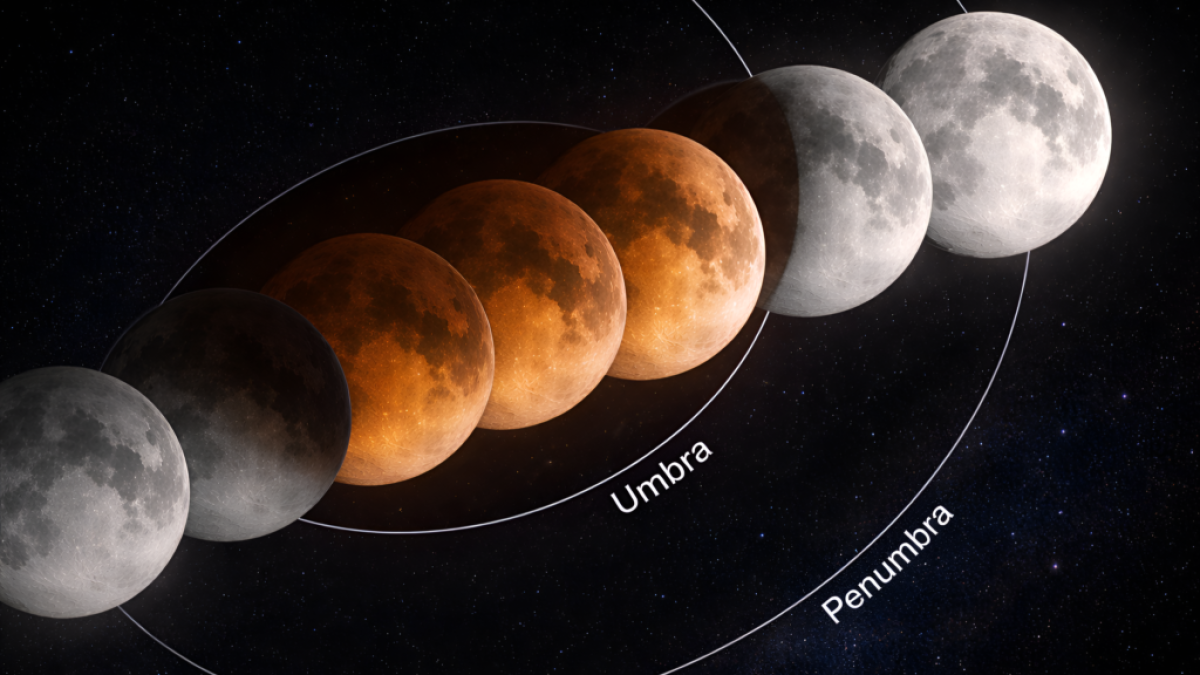
Picture the night sky alive with drama as the full moon slips into Earth’s shadow, emerging with a haunting deep red glow. This captivating event, the 2026 Blood Moon total lunar eclipse, will light up the heavens in the early morning of March 2-3, 2026. With totality stretching close to an hour, it’s a celestial highlight that sky enthusiasts in the U.S. won’t see again until 2029.
Approximately 176 million people worldwide—about 2% of the global population—stand to witness the complete show. Aligning with the enchanting worm moon, the eclipse reaches its peak on March 3 at 6:38 p.m. EST. As the moon passes through Earth’s umbral shadow, sunlight refracted through our atmosphere bathes it in that signature rusty hue, creating an unforgettable spectacle.


Best Locations to Catch the 2026 Blood Moon Eclipse
The total lunar eclipse delivers its most vivid display across western North America. Viewers from Alaska down to Hawaii will experience peak totality under clear, dark skies. Ideal spots include coastal regions in California, Oregon, and Washington, where light pollution is minimal for pristine viewing.
The full sequence, from penumbral beginnings to the end of partial phases, lasts around 5 hours and 39 minutes. While eastern U.S. observers might miss the deepest totality, the moon’s transformation remains striking. Globally, regions in South America, East Asia, Australia, New Zealand, and the Pacific will also enjoy prime visibility.
- Top U.S. hotspots: Pacific Northwest parks, Hawaiian beaches, Alaskan wilderness for midnight peaks.
- International gems: Evening views in eastern Asia; late-night magic in Australia and New Zealand.
- Pro tip: Monitor weather via apps like TimeandDate.com for exact local timings and cloud cover predictions.
No fancy gear required—the naked eye captures the magic—but adding binoculars or a backyard telescope reveals intricate crimson textures during the height of the event.
The Moon’s Path Through Earth’s Shadow: Key Phases Explained
Everything aligns when the moon positions itself directly opposite the sun, behind Earth. It first brushes the faint penumbral shadow, then dives into the darker umbra, creating a gradual darkening. NASA’s eclipse animations highlight how Pacific Coast timings sync with this progression, from subtle shading to full immersion.
Penumbral Eclipse Begins
The show opens with the penumbral phase, a soft outer shadow that dims the moon’s face ever so slightly. This builds anticipation as skywatchers scan the horizon.
Partial Eclipse Builds Tension
Next comes the partial phase, where Earth’s umbra starts “biting” into the moon’s edge. Half the disk darkens dramatically, teasing the total coverage ahead.
Totality: The Blood Moon Revealed
At its climax, totality engulfs the entire moon for nearly an hour, turning it a vivid blood red. The reverse phases unwind this in mirror fashion, restoring brightness.
- Penumbral entry: Subtle overall dimming.
- Partial umbral: Curved shadow line advances.
- Full totality: Complete red transformation.
- Exit sequence: Symmetric brightening concludes the event.
This sequence offers photographers endless opportunities, with long-exposure shots capturing the moon’s color evolution against starry skies.
Unveiling the Science Behind the Blood Moon’s Red Glow
Why the eerie crimson? Sunlight doesn’t block completely—Earth’s atmosphere refracts it like a lens. Blue light scatters away, while red rays from countless sunsets and sunrises worldwide filter through, painting the lunar surface.
This rusty red phenomenon inspires the “blood moon” moniker, stirring ancient legends of omens and prophecies. Safely observable without filters—unlike solar eclipses—it’s perfect for all ages, inviting families to marvel together.
Atmospheric factors like volcanic ash or wildfires could amplify the intensity on March 3, 2026, making each blood moon uniquely spectacular.
Exploring the Worm Moon: A Nod to Ancient Traditions
March’s full moon earns its “worm moon” name from Indigenous North American observations spanning centuries. As detailed in The Old Farmer’s Almanac, these names tracked seasonal changes tied to nature’s cycles.
Roots in Nature’s Awakening
In colder regions, thawing March soil exposes earthworms, signaling spring’s rebirth. Tribes applied this name to the entire lunar month, blending practical lore with poetic insight.
“The tribes kept track of the seasons by giving distinctive names to each recurring full moon,” the almanac explains. This eclipse supercharges the worm moon’s allure, merging cultural heritage with astronomical wonder.
- Alternative March names: Sap moon for rising tree sap; crow moon for returning birds.
- Global echoes: Similar traditions in Europe and Asia link moons to harvests and weather shifts.
Pro Tips for Maximizing Your 2026 Eclipse Adventure
Secure your spot in advance at dark-sky preserves or remote hillsides. Western U.S. national parks like Yosemite or Big Bend slash light pollution, unveiling bonus starfields.
Layer up for chilly March nights and use red-filtered flashlights to safeguard your night vision. Leverage NASA apps or Stellarium for phase alerts and augmented reality overlays.
Photography Essentials and Safety
For stunning shots, mount your camera on a tripod with bulb mode settings. Dial in ISO 800-1600, wide apertures, and experiment for that perfect red moon amid constellations.
- Safety basics: Eyes are protected naturally; never aim scopes at the pre-eclipse sun.
- Weather backups: Tune into observatory live feeds if clouds roll in.
- Community vibe: Organize star parties with blankets, thermoses, and shared scopes.
With cosmic trends like planetary retrogrades in mind, proactive planning ensures nothing derails your 2026 lunar eclipse thrill.
What’s Next? Future Lunar Eclipses to Watch
This blood moon launches a lineup of lunar marvels. Track NASA calendars for the next U.S.-visible total in June 2029, plus penumbral and partial events globally.
Each eclipse reveals Earth’s dynamic place in the solar system, from shadow geometries to atmospheric artistry. Resources like TimeandDate.com and astronomy outlets deliver precise forecasts.
Stay connected to the cosmos—more wonders await patient stargazers.
In summary, the 2026 Blood Moon total lunar eclipse weaves the worm moon‘s seasonal poetry with raw celestial power. From western U.S. vistas to worldwide streams, it beckons all to pause and ponder. Venture out March 2-3, silence the world, and surrender to the sky’s timeless show—your sense of awe will thank you.